
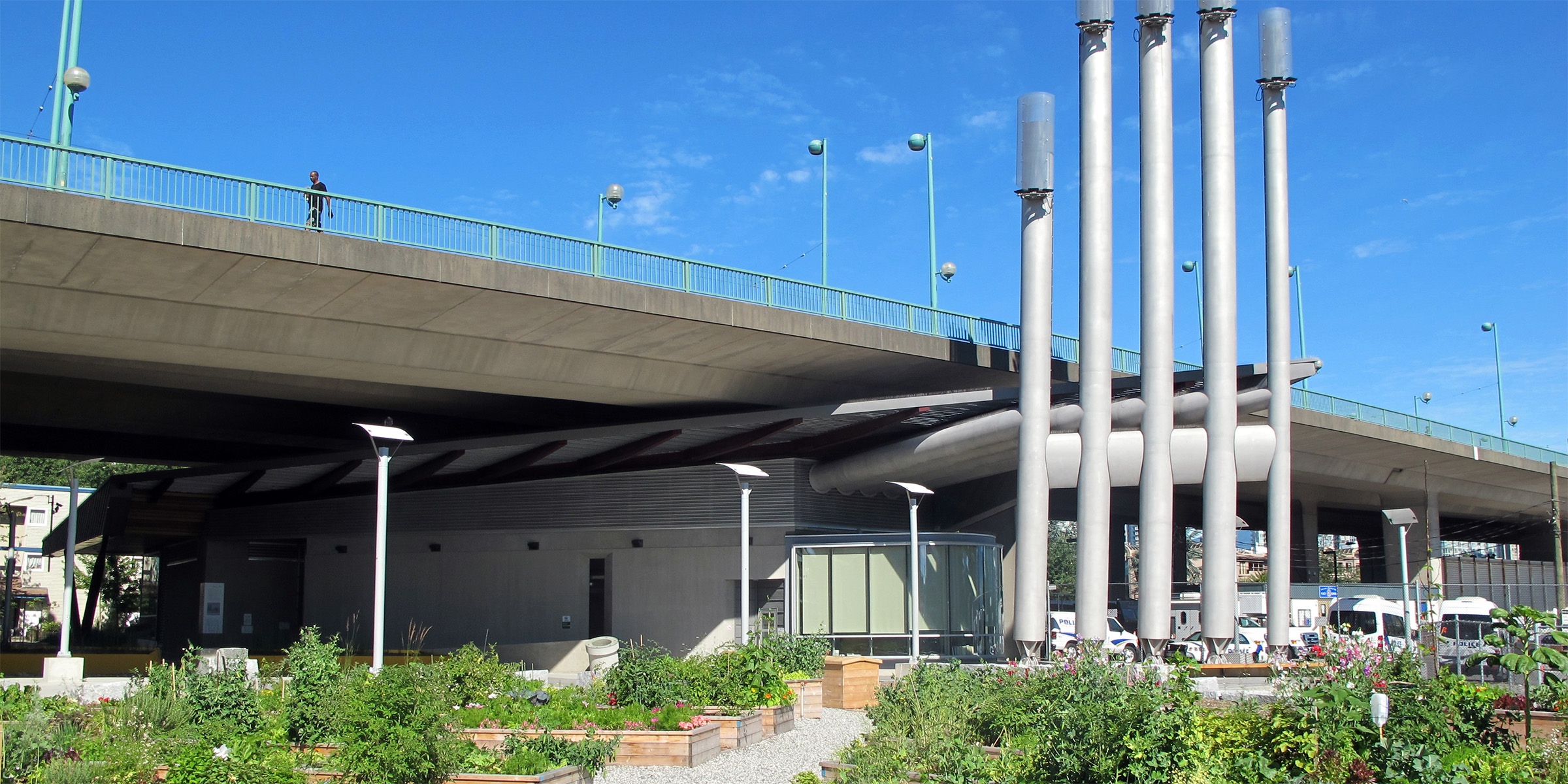
Connection to district energy system or microgrid

Jump into the legal memorandum prepared by Lidstone & Co.

District energy systems can provide heating or cooling to a community from a central location and are often used to improve efficiency at a community scale. Local governments may seek to require new developments to connect to district energy systems to support energy conservation and reduce greenhouse gas emissions.

Microgrids are localized, small-scale networks that can both operate independently and as part of the wider electricity grid. Local governments may explore microgrids to improve energy resilience, manage demand, support energy conservation and reduce greenhouse gas emissions.

In BC, municipalities likely have the authority to require connection to district energy systems—including systems that are not municipally owned—through bylaw, subject to limits under the Community Charter and the Building Act. Development Permit Areas (DPAs) likely provide a pathway to require connection to a microgrid, provided the requirement is framed as part of permitted DPA controls and aligns with limits under the Local Government Act and Building Act.

Regulatory pathways

Require new developments connect to a district energy system through the Community Charter

Last update: Jun. 2026

A municipality can likely enact a bylaw requiring new developments to connect to a district energy system, whether municipally owned or privately operated. This authority arises under section 8(3)(l) of the Community Charter, which allows councils to regulate and impose requirements relating to buildings and other structures, within defined statutory limits.

How it works

  • Section 8(3)(l) of the Community Charter allows a council to regulate, prohibit, and impose requirements in relation to buildings and other structures, and this authority has been held to apply to existing buildings.
  • Section 5 of the Building Act restricts local building requirements where the matter is already subject to a building regulation or prescribed as a restricted matter.
  • Section 5(4) provides that these restrictions do not apply if the matter is classified as an “unrestricted matter.”
  • The Building Act General Regulation identifies “any matter as it relates to a district energy system” as an unrestricted matter.
  • Because district energy systems are expressly identified as unrestricted matters, municipalities can likely regulate in this area without conflicting with the Building Code.
  • As a result, a municipality can likely pass a bylaw requiring new developments to connect to a district energy system, including systems that are not municipally owned.
  • This authority applies only to municipalities; regional districts do not have the same power under section 8 of the Community Charter.

Development Permit Area (DPA) to require connection to a microgrid or district energy system

Last update: Jun. 2026

Local governments could likely use a DPA to require buildings to connect to a microgrid or district energy system, whether municipally or privately owned. This authority depends on framing the requirement as part of energy conservation or greenhouse gas emissions reduction objectives in the Official Community Plan and linking it to permitted DPA controls.

How it works

Sections 488(1)(h) and (j) of the Local Government Act allow local governments, through their OCP, to designate DPAs to promote energy conservation and the reduction of greenhouse gas emissions.

  • Within a designated DPA, a development permit is required before a property owner may construct, add to, or alter a building or structure.
  • Section 491(9) allows requirements related to:
    • form and exterior design;
    • specific features of the development; and
    • external machinery, equipment, and systems.
  • The Building Act limits local building regulation, but external systems and equipment are listed as “unrestricted matters” for energy efficiency or GHG reduction DPAs, aligning with the authority provided in the Local Government Act.

The authority to regulate specific features of development, including external machinery, equipment, and systems, likely allows a local government to require connection to a microgrid or district energy system. This includes both municipally owned and non‑municipally owned systems, provided the requirement is properly framed within DPA guidelines.

Note: DPA requirements apply only when a development permit is triggered, meaning new buildings and existing buildings undergoing alterations or additions.

Glossary Entry

Bylaws Under the Community Charter

The Community Charter gives municipalities the authority to regulate specific local matters by bylaw.

Part 2 of the Community Charter outlines the powers municipalities have to pass bylaws in defined areas, following a “spheres of jurisdiction” model. This means local governments can regulate, require, or prohibit certain activities—such as animal control or public health—within specific policy areas, or “spheres.”

Some of these areas are classified as spheres of concurrent authority under Section 9 of the Charter. This includes:

  • Section 8(3)(i) – public health
  • Section 8(3)(j) – protection of the natural environment

In these cases, municipalities must receive approval from the relevant provincial minister before adopting a bylaw—even if the bylaw also addresses issues in non-concurrent areas.

Glossary Entry

Development Permit Areas

A planning tool that lets local governments guide how new development supports certain purposes, including energy efficiency and climate goals.

Under the Local Government Act, local governments can designate areas in their Official Community Plan (OCP) as Development Permit Areas (DPAs). Within a DPA, landowners must apply for a permit before starting construction or making major changes to buildings or land.

DPAs aimed at reducing greenhouse gas emissions or promoting energy conservation can include requirements for landscaping, building siting, exterior design, or energy systems like heat pumps or solar panels.

DPAs can apply to a single parcel or across an entire municipality, depending on local goals and planning context.

Glossary Entry

Connection to district energy system or microgrid

District energy systems can provide heating or cooling to a community from a central location and are often used to improve efficiency at a community scale. Local governments may seek to require new developments to connect to district energy systems to support energy conservation and reduce greenhouse gas emissions.

Microgrids are localized, small-scale networks that can both operate independently and as part of the wider electricity grid. Local governments may explore microgrids to improve energy resilience, manage demand, support energy conservation and reduce greenhouse gas emissions.

In BC, municipalities likely have the authority to require connection to district energy systems—including systems that are not municipally owned—through bylaw, subject to limits under the Community Charter and the Building Act. Development Permit Areas (DPAs) likely provide a pathway to require connection to a microgrid, provided the requirement is framed as part of permitted DPA controls and aligns with limits under the Local Government Act and Building Act.